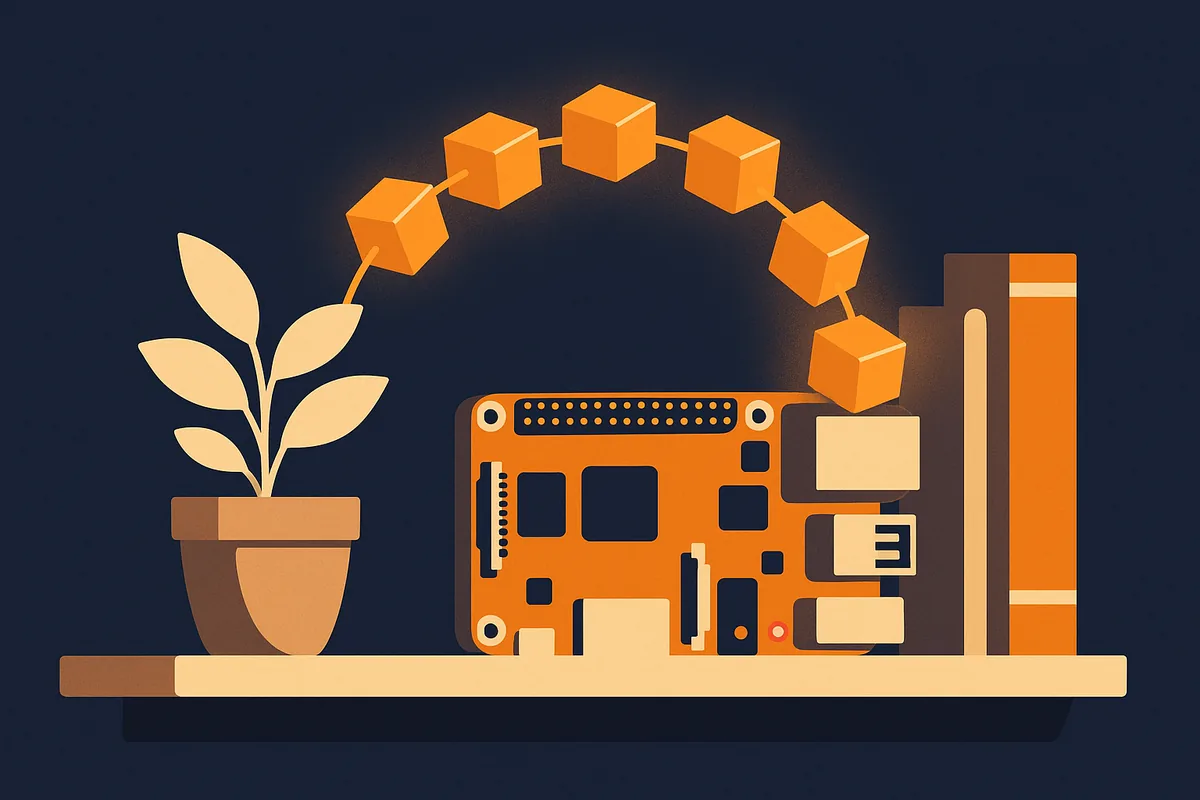
"Don't trust, verify" is Bitcoin's founding ethos, and running a node is what it looks like in practice. A node downloads and independently checks every block and every transaction against Bitcoin's rules — your own copy of the ledger, validated by your own hardware, answering to no one. It's also less work and less money than most people assume.
What a node actually gets you
- Verification. Your wallet balance comes from rules your machine enforced — not from trusting someone's server. If anyone ever tried to change Bitcoin's rules (even the 21 million cap), your node would simply reject the counterfeit chain.
- Privacy. Without your own node, your wallet asks someone else's server about your addresses — leaking your balances and transaction history to a stranger. Your own node keeps those lookups at home.
- Sovereignty. Nodes, not miners, define Bitcoin. Every node is one more vote that the rules stay the rules, and one more copy of the ledger no government can delete.
- Infrastructure. A node is the foundation for a self-hosted Lightning node, a private block explorer, mempool monitoring, and connecting wallets like Sparrow with zero third parties.
The easy paths
Node-in-a-box: Start9 or Umbrel
The most popular route. Both projects turn a small computer into a personal server with an app-store interface — Bitcoin Core, Lightning, mempool explorer, and dozens of other self-hosted apps, each installed with a click. Start9's StartOS leans harder into verifiability and running fully open; Umbrel is the slickest experience and has grown into a general home-server OS. Either runs happily on a Raspberry Pi 5 or, better, any old mini-PC or laptop with 16GB of RAM and a 2TB SSD (the blockchain is ~600GB and growing, so leave room).
Just install Bitcoin Core
The no-frills path: download Bitcoin Core on a computer you already own, verify the signature, and let it sync. If disk space is tight, pruned mode keeps only recent blocks and runs a full validating node in as little as 10–20GB — pruning sacrifices serving history to others, not your own verification. This is the cheapest possible way to stop trusting other people's servers: it costs nothing but bandwidth and patience.
What to expect
The initial sync validates fifteen-plus years of history and takes anywhere from half a day to a few days depending on hardware. After that, a node sips resources — a few watts, a bit of bandwidth. Point your wallets at it (Sparrow makes this trivial), optionally enable Tor so your node doesn't advertise your home IP, and you're done: you've quietly become part of Bitcoin's backbone.
Lightning, if you want it
With a node running, a Lightning node (LND or Core Lightning — one click on Start9/Umbrel) lets you route payments and manage your own channels, with Zeus as the remote control on your phone. Fair warning: self-hosted Lightning is a hobby, not an appliance — channels need liquidity management and your node needs to stay online. Rewarding, but genuinely optional; plenty of node runners happily stick to Phoenix for payments.
Several of our members run Start9, Umbrel, and bare Bitcoin Core setups — bring a question (or a half-broken node) to a meetup and someone will get you sorted.