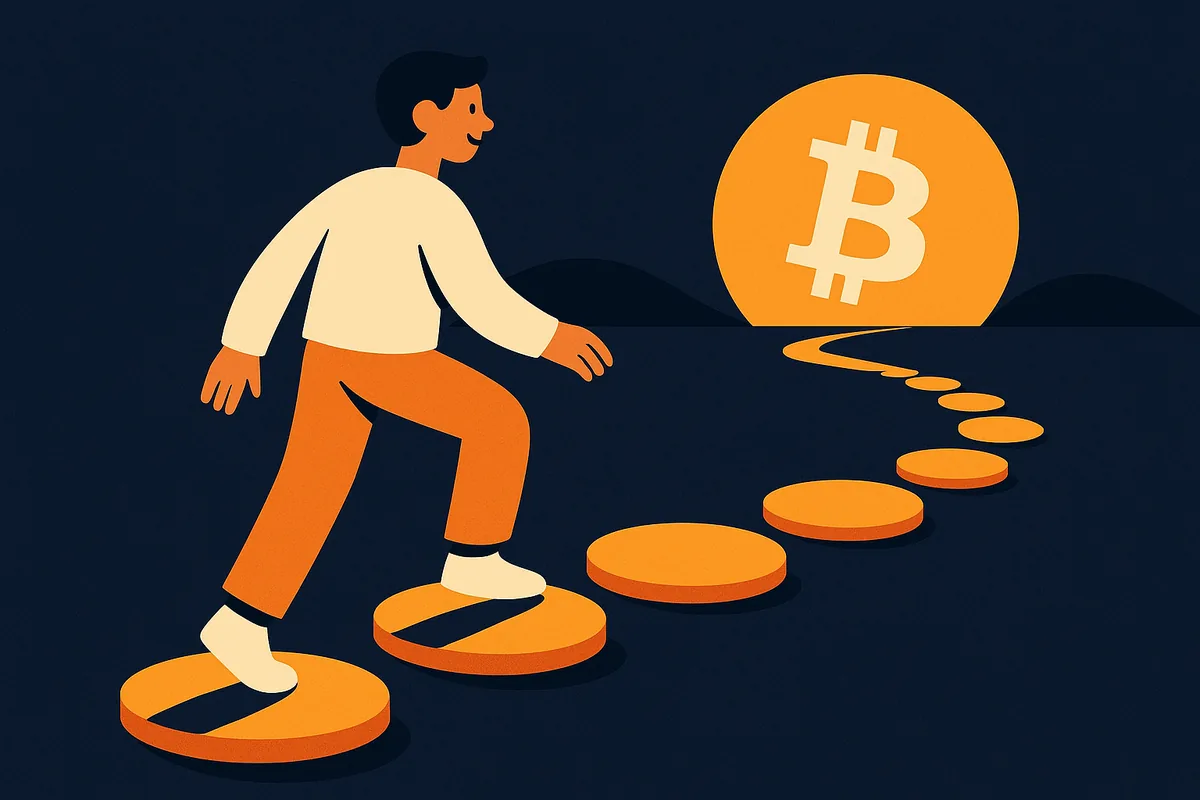
Everything you need to understand Bitcoin, in plain English, with no hype and no jargon. This is the explanation we wish someone had given each of us at the start.
What is Bitcoin, actually?
Bitcoin is money that works over the internet without a company or government running it. There's no Bitcoin headquarters, no CEO, and no customer service line. Instead, thousands of computers around the world all keep an identical copy of the same ledger — a record of who owns what — and they check each other's work constantly. That ledger is called the blockchain.
Because no single party controls the ledger, nobody can freeze your funds, reverse your transactions, or print more Bitcoin to pay for things. The rules are enforced by math and by everyone watching everyone else — not by trust in an institution.
Why only 21 million?
Bitcoin's supply is capped at 21 million coins, and that cap is enforced by every computer in the network. This is the single most important fact about Bitcoin. Dollars can be printed; Bitcoin cannot. If you hold 1 bitcoin, you will always hold at least 1 of the 21 million that will ever exist.
Don't worry about a whole coin being expensive — each bitcoin divides into 100 million units called sats (satoshis). Nobody starts by buying a whole coin. Stacking sats is the normal way in.
How do transactions work?
When you own bitcoin, what you really own is a secret key — a very large number that lets you spend coins recorded on the ledger. When you send bitcoin, your wallet uses that key to sign a message that says "move this amount to that address." Miners bundle these messages into blocks roughly every ten minutes, and the network verifies every signature. No valid signature, no spend. That's the whole trick.
What's mining, in one paragraph?
Mining is a global competition to add the next page to the ledger. Miners burn real electricity solving a puzzle, and the winner earns newly issued bitcoin plus transaction fees. The energy cost is the point: it makes rewriting history absurdly expensive, which is what keeps the ledger honest without a referee.
Getting started, safely
- Start small. Buy an amount you're comfortable learning with. Treat your first purchase as tuition.
- Use a reputable exchange to buy, but don't leave your coins there long-term. Exchanges get hacked and go bankrupt — many people have learned this the hard way.
- Move to your own wallet. "Not your keys, not your coins" is the community's oldest rule. See our mobile wallet and hardware wallet guides.
- Write down your seed phrase on paper (never in a screenshot, email, or cloud note) and store it somewhere safe. Whoever has those words has your bitcoin.
- Ignore everything else. Yield programs, new tokens, "the next Bitcoin" — the graveyard is full of them. Bitcoin is boring by design. Boring is good.
Nothing here is financial advice — we're a community of learners, not advisors. The best way to get comfortable is to come to a meetup and ask the questions you think are too basic. They aren't.